

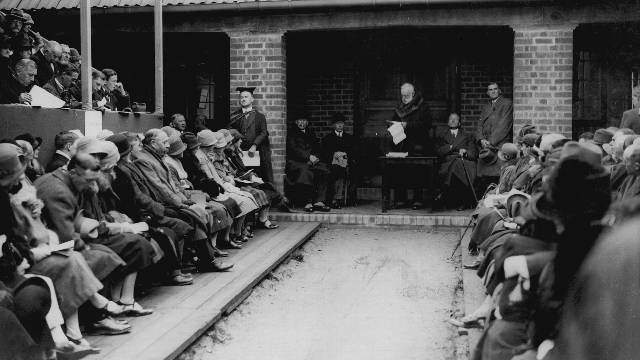
 The National Institute of Poultry Husbandry at 100 - rediscovering an eye witness account
To mark the Centenary of the opening of National Institute of Poultry Husbandry at Harper Adams, we’re sharing a contemporary acc …
Posted 3 November
Trap crop research project features on BBC TV and website
31 October 2022

A research project at Harper Adams examining how trap crops could help protect potatoes has been featured on the BBC.
The Innovate UK project – which is a collaboration between the University, Produce Solutions, and CHAP Agritech, is aimed at reducing the impact of nematodes – small, worm-like creatures whose presence can damage crops such as potatoes.
Great day helping DeCyst trap crops make the BBC news! @ProduceSolution @DrMattBack @HarperAdamsUni @CHAPAgriTech @Crop_Trials pic.twitter.com/5YaIvYCnJ4
— Janine Adamson (@JanineAcrops) October 27, 2022
Afternoon spent talking with @DrDavidGK and BBC Midlands Today @bbcmtd about DeCyst trap crops for PCN control and our @innovateuk project. Who from the project team will make the final cut? Almost certainly not this chap! @CHAPAgriTech @greenvaleAP @DrMattBack @GriffithRichard pic.twitter.com/Rm5CIXZM88
— Produce Solutions (@ProduceSolution) October 27, 2022
Dr Matthew Back, Reader in Nematology at Harper Adams, told science and environment correspondent Dr David Gregory-Kumar: “Nematodes, in general, will infect leaves, shoots or roots and when they set up their feeding sites, they are essentially disrupting the cell function within the plants – so where nematodes are left unmanaged they will build up in the soils and they can be very, very damaging over time.”
Great to see AAB Council member @DrMattBack @HarperAdamsUni on the tele promoting a project on using trap-crops to protect ?? from Potato Cyst Nematode ??
— AAB (@AABiologists) October 28, 2022
'Prickly plant may be able to beat crop pest - Shropshire farmers'@DrDavidGK https://t.co/PwtWQ3Nj5q
To tackle this, the project is working to establish plants which work as trap crops – essentially, attracting the nematodes towards them.
However, once this happens, the trap crop reacts differently to the main crop – meaning the nematodes lifecycle is disrupted.
The report featured on BBC Midlands Today – for anyone who missed it, you can read Dr Gregory-Kumar’s piece on the project on the BBC website here.
Related Posts
The National Institute of Poultry Husbandry at 100 - rediscovering an eye witness account
To mark the Centenary of the opening of National Institute of Poultry Husbandry at Harper Adams, we’re sharing a contemporary acc …
Posted 3 November
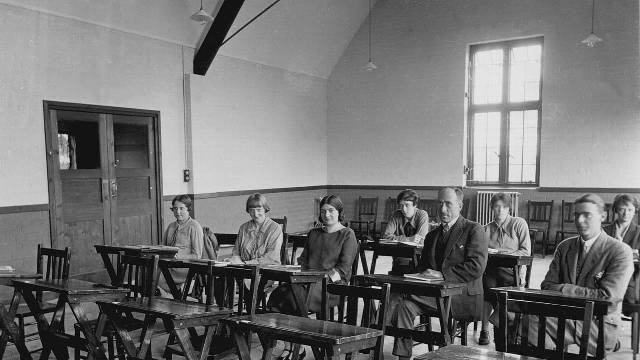 'More than 100 years of expertise' - a brief history of poultry at Harper Adams
Dr Stephen Mansbridge is Reader in Animal Science and Bioinformatics at Harper Adams University as well as Director of the Animal Science Re …
Posted 3 November
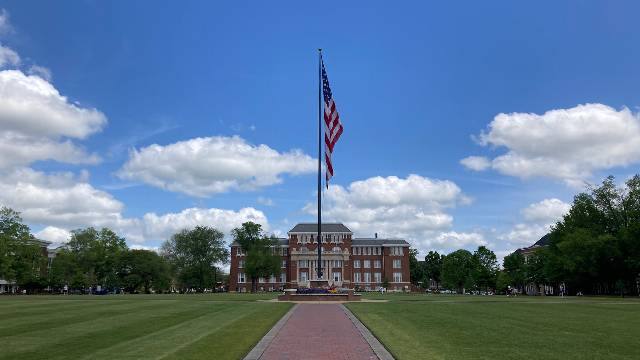 Agricultural Autonomy Institute joins Harper Adams University's 125th anniversary celebrations
A leading American expert in agricultural autonomy has paid tribute to Harper Adams University as it marks its 125th anniversary.Dr Alex Tho …
Posted 22 October
 Sky's the limit: Helen joins MP's fundraising parachute jump
A charity skydive by a Harper Adams University Business Development Consultant has helped raise more than £16,000 for a new cancer cen …
Posted 21 October